Maximizing Your Mobile Tire Service Profitability
December 8, 2025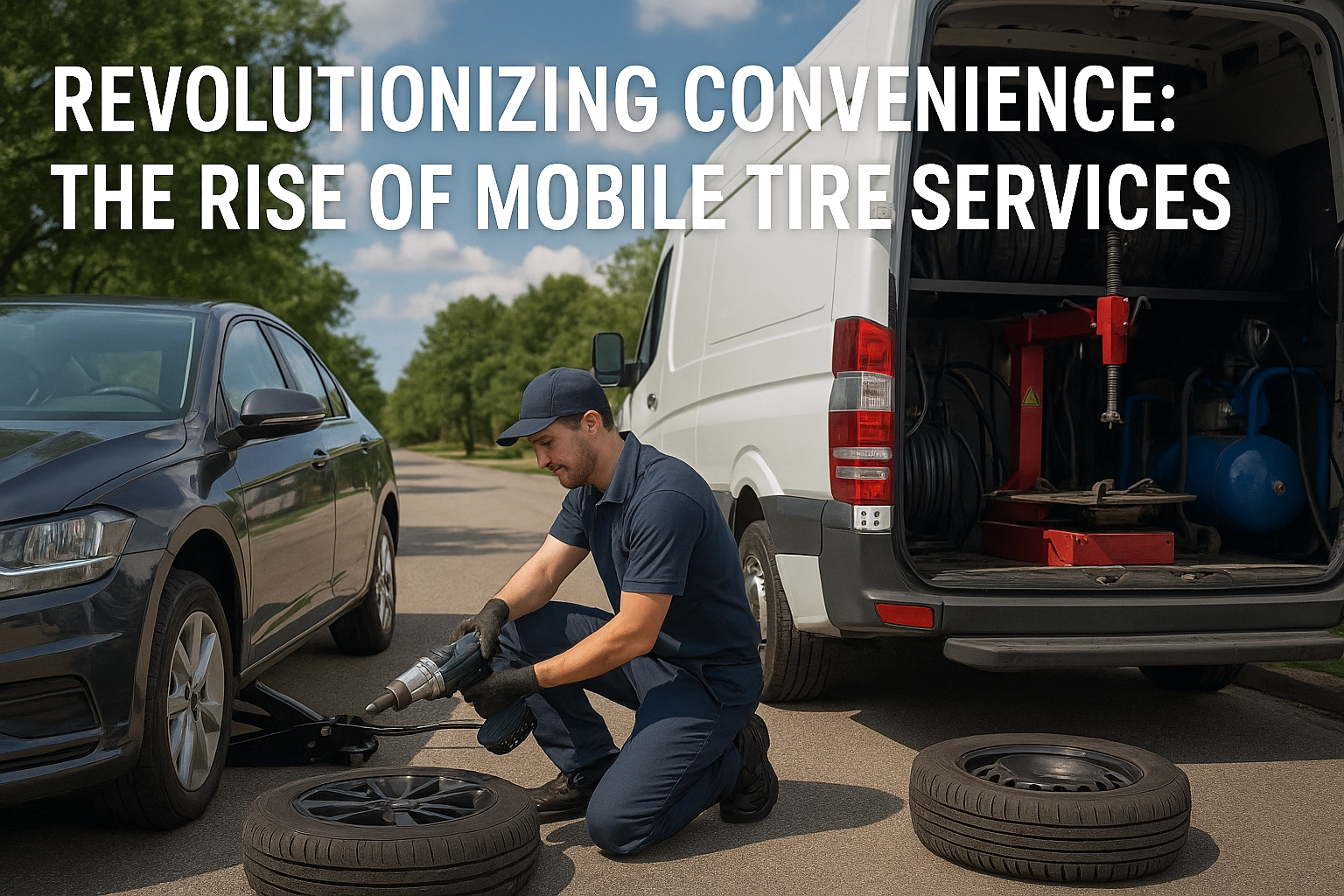
Stuck at the curb with a flat? The solution may already be in your pocket. Mobile tire services are moving from niche convenience to mainstream infrastructure, transforming how drivers maintain and repair their vehicles. In this analysis, we cut through the hype using data and field comparisons, drawing on mobile tire service reviews to assess what actually matters: average response times, pricing transparency, equipment capabilities, technician training standards, warranty policies, and geographic coverage.
You will learn how these services stack up against traditional shops on speed, cost, and quality, where they excel, and where the tradeoffs hide. We will decode common complaints and five-star claims in reviews, separate one-off anecdotes from consistent patterns, and highlight red flags to watch for before you book. We also map typical use cases, from commuter flats to fleet downtime, and outline realistic savings scenarios. By the end, you will know how to evaluate providers with a simple rubric, when to choose mobile over brick and mortar, and which metrics predict a reliable experience.
Background of Mobile Tire Services
Evolution from shop-based to mobile models
Tire care traditionally meant booking time at a brick-and-mortar shop, sitting in a waiting room, and losing a half day of productivity. The mobile model turned that paradigm on its head by outfitting service vans with compressors, balancers, tire changers, TPMS tools, and inventory so technicians can install, repair, rotate, and balance on-site. For Tampa Bay drivers, providers like LP Mobile Tire LLC exemplify this shift, delivering tire work at home, the job site, or a roadside shoulder, which cuts downtime and towing risk. This approach aligns with broader sustainability goals because fewer customer trips to shops means fewer miles driven and lower emissions, a point echoed in industry analyses. It also enables more personalized, one-on-one service, a benefit often highlighted in mobile tire service reviews from time-strapped commuters and fleet managers.
Convenience trend and market demand
The move to on-demand automotive care reflects consumer expectations shaped by same-day delivery and app-based booking. Digitally scheduled mobile tire service reduces friction, supports proactive maintenance for EVs and hybrids, and limits disruptions for commercial fleets. Market data indicates this is a durable shift: the global mobile tire fitting market was valued around 4.3 billion dollars in 2024 and is projected to reach 7.8 billion dollars by 2032, implying an 8.6 percent CAGR through 2031, according to the global mobile tire fitting market outlook. North America holds more than 35 percent share, supported by high vehicle ownership and a mature aftermarket, per North America market share insights. Europe and Asia Pacific are also expanding quickly, helped by safety regulations, sustainability priorities, urbanization, and digital platforms that make booking simple, as shown in regional growth analysis for Europe and Asia Pacific. For Tampa Bay owners and fleet operators, the actionable takeaway is clear: schedule mobile service where the vehicle sits, verify providers’ response times and on-van capabilities in mobile tire service reviews, and leverage transparent pricing to control total cost while minimizing downtime.
Benefits of Mobile Tire Services
Convenience wherever the vehicle sits
On-site tire care removes the travel and waiting friction that has long frustrated drivers, and demand reflects it. A recent [Mobile Tire Service Marketing Mix analysis](https://finmodelslab.com/products/mobile-tire-service-marketing-mix) reports that nearly 70% of consumers prefer services that meet them at their chosen location. For Tampa Bay vehicle owners, LP Mobile Tire delivers at-home installs, job site repairs, and roadside swaps, whether the car is in a condo garage, an office lot, or off the Howard Frankland. This convenience not only saves hours but also reduces unnecessary drive time, cutting emissions compared with shop visits. Actionable tip: book service during a meeting or lunch break, confirm clearance around the vehicle, and provide wheel lock location to streamline the visit.
Rapid response times that boost satisfaction
Speed is a primary decision driver, and timeliness directly impacts satisfaction. A [Porter’s Five Forces analysis for mobile tire services](https://finmodelslab.com/products/mobile-tire-service-five-forces) notes that 88% of customers rate timely service as critical when selecting providers. Mobile units can be staged across service corridors, enabling same-day arrivals that traditional shops struggle to match in peak season. In practice, a contractor with a puncture at a Tampa job site can get a plug or replacement on the spot, avoiding a tow and lost billable hours. Actionable tip: when comparing operators, ask for average ETA windows, whether they offer live technician tracking and text updates, and what after-hours coverage looks like during weekends and holidays.
Transparency and trust in service quality
Mobile tire services build trust by working in plain view and using digital workflows that itemize labor, parts, and fees before work begins. Providers that emphasize convenience and efficiency, as highlighted in this overview of the [benefits of mobile tire repair](https://atltireexperts.com/top-5-benefits-of-mobile-tire-repair-convenience-and-efficiency-right-where-you-are/), tend to communicate clearly and deliver consistent outcomes. Best-in-class operators document tread depth, tire age, torque specs, and photo evidence, creating a shareable maintenance record for fleets and families. This data-rich approach is reflected in mobile tire service reviews, where customers frequently cite fair pricing, clean installations, and respectful on-site conduct. Actionable tip: verify DOT date codes on new tires, request before-and-after photos, and compare line-item quotes to ensure apples-to-apples pricing and long-term trust.
LP Mobile Tire: A Leader in Innovation
Around-the-clock coverage across Tampa Bay
LP Mobile Tire operates 24/7 across Tampa Bay, meeting drivers at home, work, or roadside without disrupting the day. Their footprint spans Gulfport, Pinellas Park, Saint Pete Beach, Largo, Safety Harbor, Seminole, Clearwater, Tampa, Bradenton, Sarasota, Brandon, and Ruskin, which helps reduce travel time and emissions by bringing the shop to the vehicle. According to industry analyses, mobile models cut trips to storefronts, lowering the carbon footprint while speeding resolution. For busy customers who cannot sit in waiting rooms, on-site service is a practical time saver. See service areas and availability on LP Mobile Tire’s 24/7 service overview.
Personalization, pricing, and reliability
Beyond coverage, LP Mobile Tire emphasizes clear, flat-rate pricing, one-on-one customer support, and fleet to semi-truck capability, which signals operational maturity. Transparent quotes align with broader market expectations that mobile providers eliminate hidden fees, and they shorten decision time for stranded drivers. Response is tailored, from a simple tire swap in a driveway to multi-vehicle fleet work at a depot, minimizing downtime. Customers can further reduce friction by pre-saving contact details and scheduling after-hours installs to avoid peak traffic. Details on pricing approach and service scope are reflected in the company’s materials, including LP Mobile Tire’s homepage.
Growth signals and what reviews highlight
Macro trends point in LP’s favor. Tire demand has risen with the growth of electric and hybrid vehicles in 2025, and mobile providers that can service diverse fitments are winning share. Service quality matters, too; a recent J.D. Power study reported a 19 percentage point drop in loyalty when traction and handling disappoint, which underscores the value of precise installs and checks. Local mobile tire service reviews echo this, citing reliability and rapid ETA communication. One customer, Anna Lewis, called the team “reliable” and “quick,” reinforcing LP Mobile Tire’s reputation as a dependable first call across Tampa Bay.
Case Study: Impact on Customer Satisfaction
Faster response drives loyalty
In mobile tire service reviews, faster response times strongly correlate with higher loyalty and repeat bookings. Industry benchmarks show roughly 88% of customers rank timeliness as a top decision factor, which aligns with LP Mobile Tire’s on-location model across Tampa Bay. Roll by Goodyear provides a useful analogue, using pre-appointment texting to confirm tire sizes and lifting customer response rates from 44% to 80% Roll by Goodyear case study on Textline. Adopting similar SMS checklists, wheel spec confirmation, parking access, and TPMS notes, helps LP Mobile Tire prevent surprises on arrival. Fewer surprises mean fewer callbacks and steadier repeat business.
Shorter waits and fewer towed tire incidents
Service time is the most visible satisfaction lever. A Dallas comparison found mobile jobs usually finish in 30 to 45 minutes, while traditional shops often take 2 to 4 hours once travel and queueing are included Mobile Tire Service vs Tire Shop Dallas TX | Cost, Time & Convenience Comparison. Cutting the drive on a damaged tire also lowers the likelihood of rim damage and emergency tows, both high-friction events for customers. For LP Mobile Tire clients at home or a job site, work continues as the tire service is completed. Operationally, route optimization, accurate ETAs, and inventory kitting based on VIN history are practical steps to compress waits further.
Customer experience vs traditional shops
Customer narratives highlight convenience and personal attention that traditional shops rarely match, including one on one technician focus and no waiting rooms What are the benefits of mobile tire service compared to a traditional shop?. Combined with transparent pricing and no travel time, the value proposition tilts toward mobile service. For busy Tampa Bay professionals and families, maintenance fits the day rather than interrupting it. LP Mobile Tire can widen this advantage by publishing a clear price matrix, offering narrow arrival windows, and requesting post service feedback within 24 hours. These measures translate into higher CSAT, fewer escalations, and stronger lifetime value.
Competitor Analysis: A Market Overview
Key competitors and positioning
Tire Butler sets a mature benchmark for mobile tire service, reporting more than 520,000 tires changed and over 100,000 vehicles served across the GTA, with sales, swaps, storage, rim repair, and flats handled on site. Its model targets convenience-first customers and luxury segments with multi-van coverage and predictable appointment windows. Goodyear extends its national brand with mobile installations in select metros, where Houston and Columbus locations hold 4.43 and 4.5 average ratings, indicating strong local execution. The contrast is scale versus specialization, one favors a dedicated mobile DNA and the other leverages a nationwide supply chain. For Tampa Bay consumers, these competitors calibrate expectations around on-site capability, clean pricing, and punctuality that LP Mobile Tire can meet with a localized, faster-response footprint.
Recognition signals and market shift
Tire Butler’s four-time Consumer Choice Award win signals consistent service quality and advocacy that drive referrals. Goodyear’s local mobile ratings are solid, but its 1.8 out of 5 Trustpilot score reveals recurring pain points around scheduling and customer support, a reminder that execution at scale can be uneven. At the market level, 2025 tire sales growth tracked to rising EV and hybrid adoption, which favors mobile formats that can service vehicles at home with proper torque specs and TPMS recalibration. Customers also reward transparent, menu-based pricing and the time savings and emissions reduction that come from eliminating trips to a shop. Action plan for LP Mobile Tire, codify no-hidden-fee pricing, publish on-time arrival and first-visit completion metrics, train for EV platforms, partner with Tampa dealers for value-add delivery, and request a review after every job to amplify positive mobile tire service reviews.
Future Implications for the Auto Service Industry
Projected growth and expansion of mobile services
Mobile tire services are on a strong upward curve, with global market value estimated around 1.8 billion dollars in 2024 and projected to exceed 4.7 billion dollars by 2033, an approximate 11 percent CAGR. North America contributed roughly 973 million dollars in 2024 and is set for steady expansion near 6.8 percent annually, while Asia Pacific, at about 695 million dollars, is growing faster at around 8.5 percent. Growth tracks with the broader tire industry’s lift from rising electric and hybrid vehicle adoption in 2025, which increases demand for specialized tire fitment and maintenance. Convenience is no longer a differentiator but an expectation, and the carbon savings from eliminating customer travel further strengthens the mobile value proposition. For Tampa Bay providers like LP Mobile Tire, this trajectory points to broader service footprints, higher fleet utilization, and deeper partnerships with auto dealers and fleets.
Role of technology and innovation in future trends
Innovation will separate leaders from fast followers. Smart tire ecosystems that monitor pressure, temperature, and tread in real time are moving into mainstream fleets, with major manufacturers reporting hundreds of millions of annual sensor readings that inform proactive maintenance. AI and machine learning, including digital twin approaches, are improving wear prediction, optimizing rotation intervals, and lowering roadside failure rates. On the front end, mobile apps that enable scheduling, technician tracking, and contactless checkout are accelerating adoption, a pattern echoed in the wider mobile car care market that is projected to scale rapidly through 2030. Route optimization, remote TPMS programming, and energy‑efficient wireless sensors will drive faster response and tighter cost control.
Opportunities for businesses to integrate mobile services
Operators can enter or expand by upfitting vans for about 25,000 dollars each, then scaling to meet zone-based demand with two to four units and staggered shifts. Priorities include integrating IoT tire monitoring, deploying AI-driven service recommendations, and bundling roadside assistance to lift average revenue per job. Partnerships with EV dealerships, commercial fleets, and property managers can stabilize utilization and reduce acquisition cost per customer. Measure what mobile tire service reviews reward most, namely first-contact-to-wheels-rolling time, price transparency, and on-site professionalism, then tie incentives to those KPIs. For LP Mobile Tire, doubling down on sensor-enabled maintenance plans and sustainable practices can anchor leadership as mobile becomes the industry default.
Conclusion: Embracing Mobile Tire Solutions
Mobile tire solutions have moved from novelty to necessity, and the analysis throughout this piece shows why. On-site service removes the trip to a shop, which cuts idle time for drivers and reduces emissions by eliminating unnecessary vehicle travel. Transparent, clear pricing models minimize surprise fees, while one-to-one attention improves quality control for busy customers who cannot sit in a waiting room. The market tailwind is also real, with 2025 industry reports noting steady tire sales growth driven by a rising mix of electric and hybrid vehicles that need specialized tire handling. In Tampa Bay, providers such as LP Mobile Tire turn these forces into everyday value, meeting drivers at home, at the job site, or roadside with the right equipment and inventory.
Adoption now comes down to disciplined selection. Review mobile tire service reviews for proof of fast dispatch, consistent workmanship, and courteous communication. Verify EV readiness, TPMS expertise, and tire options that match your vehicle’s load and speed ratings; confirm published pricing before work begins. Look for digital scheduling, real-time updates, and providers that publish average response times and warranty terms, then prioritize offerings that combine mobile tire service with roadside assistance. For Tampa Bay drivers and fleet managers, choosing a local mobile specialist like LP Mobile Tire can compress downtime, raise satisfaction, and set a new benchmark for convenience. The direction of travel is clear, mobile delivery is redefining service expectations across automotive care, and early adopters will enjoy faster, cleaner, and more predictable outcomes.